2025 Country Update
National PV Policy
In 2025, three fundamental policy frameworks defining the future direction of PV deployment in Japan were established.
The Government of Japan formulated the “GX2040 Vision,” outlining national goals to ensure stable energy supply, economic growth, and decarbonization toward 2040. The Ministry of Economy, Trade and Industry (METI) formulated the Seventh Strategic Energy Plan, positioning PV as the largest power source in Japan’s electricity mix by 2040. Under this plan, total electricity generation in 2040 is projected at approximately 1 100 – 1 200 TWh, with renewables accounting for 40 – 50 %, nuclear 20 %, and thermal 30 – 40 %. Renewables are thus expected to surpass thermal power to become the dominant electricity source. Within renewables, PV is projected to account for approximately 23 – 29 % of total electricity generation. In terms of both installed capacity and electricity generation, PV is expected to become Japan’s leading power source among all generation technologies (thermal is not disaggregated by fuel type). Estimated PV installed capacity in FY 2040 is projected to reach 263–371 GWDC. In parallel, the Ministry of the Environment (MOE) formulated a new “Plan for Global Warming Countermeasures,” promoting energy transition toward decarbonized power sources.
Against this policy backdrop, METI implemented a wide range of measures to improve the business environment for full-scale PV deployment. These measures include support for initial investment in rooftop PV systems, the introduction of an approval scheme for Long-term Stable Qualified PV Power Producers, promotion of the FIP scheme, enhanced evaluation of renewable energy value, strengthened support for perovskite solar cells (PSC), and support for grid-scale storage battery systems. MOE has promoted locally-led deployment through the designation of Decarbonization Leading Areas, implemented proactive installation in public facilities, supported the expansion of self-consumption by private companies and the utilization of the PPA model, and has also initiated efforts toward the deployment of next-generation solar cells. The Ministry of Land, Infrastructure, Transport and Tourism (MLIT) amended the Building Energy Efficiency Act to mandate compliance with energy conservation standards for all new residential and non-residential buildings, while expanding renewable deployment across public infrastructure sectors, including railways, roads, ports, and airports. The Ministry of Agriculture, Forestry and Fisheries (MAFF) revised the basic policy under the Act on Promoting Generation of Electricity from Renewable Energy Sources Harmonized with Sound Development of Agriculture, Forestry and Fisheries, clarifying the concept of “desirable agrivoltaic systems” and accelerating their deployment. Local governments advanced the designation of renewable energy promotional areas and expanded PV deployment on public facilities and public land through PPAs. Tokyo Metropolitan Government and Kawasaki City introduced mandatory PV installation for newly built houses.
In December 2025, the government convened the first Ministerial Council concerning Large-scale PV Projects to strengthen regulatory measures, enhance coordination with local communities, and prioritize support for projects in harmony with local communities. At the meeting, the government adopted the “Package of Measures for Large-Scale PV Projects (MW-scale PV power plant),” which consists of three pillars: strengthening legal regulations for inappropriate projects that raise environmental or safety concerns, reinforcing coordination with local initiatives, and prioritizing support for community-based projects. These measures will be reflected in support schemes from FY 2026 onward.
Research, Development and Demonstration
As for research, development, and demonstra-tion activities concerning PV, technology development for commercialization administered by METI has been conducted by the New Energy and Industrial Technology Development Organization (NEDO) and fundamental R&D administered by Ministry of Education, Culture, Sports, Science and Technology (MEXT) has been promoted mainly by the project of the Japan Science and Technology Agency (JST) and the project to subsidize the Grants-in-Aid for Scientific Research.
In March 2025, NEDO formulated a new technology development roadmap, “NEDO PV Challenges 2025,” which presents strategic directions for enabling large-volume introduction of PV systems. Based on this strategy, NEDO launched and is implementing the “Technology Development Project for the Expansion of PV Introduction” (FY 2025 – FY 2029) as a new program starting in FY 2025. In September 2025, a total of 24 projects were selected under this program, including 20 R&D themes and 4 trends survey themes. The project includes the development of tandem solar cell technologies, installation and O&M technologies for PV systems tailored to specific installation sites, as well as recycling technologies for PSCs.
NEDO is also implementing the Next-Generation Solar Cell Development Project under the Green Innovation Fund (GIF) project (FY 2021 – FY 2030). This project focuses on the development and demonstration of fundamental and commercialization technologies for film-type PSCs. In 2025, three additional companies were selected under the demonstration project. The three selected companies, in collaboration with installation contractors and other partners, conducts five-year programs on mass production technology development and field demonstrations toward the commercialization of both film-type and building-integrated glass-type PSCs.
In cooperation with METI, MOE launched a new deployment support program aimed at creating social implementation models for film-type PSCs, under which four proposals submitted by local governments were selected.
In addition to NEDO programs, numerous PSC demonstration projects were implemented in 2025. Companies such as Sekisui Chemical, EneCoat Technologies, Aisin, Toshiba, Ricoh, Panasonic, and YKK AP initiated demonstration installations at various facilities in collaboration with local governments and private-sector users.
Regarding demonstration of PV system utilization technologies, METI, NEDO, and MOE conduct demonstration projects related to power system control incorporating PV and storage battery systems. In 2025, METI and MOE jointly continued demonstration projects for Net Zero Energy Buildings (ZEB). MOE conducts technology development and demonstration projects toward the realization of carbon neutrality. In 2025, it implemented projects including R&D on grid-scale electricity storage systems to facilitate renewable energy integration, demonstration projects to improve PV performance in snowy regions, and the development and demonstration of tandem PSC technologies. In Leading Decarbonization Areas designated by MOE, local governments conducted PV-related demonstrations as part of decarbonization initiatives. In the private sector, demonstration tests were launched for agrivoltaic systems and PPA business models combining PV and storage batteries.
Industry and Market Development
Japan’s cumulative PV installed capacity is estimated to have exceeded 100 GW as of 2025. Meanwhile, annual installations in 2025 are estimated at approx. 5.7 GW, at a level comparable to 2024 (preliminary estimate by RTS Corporation).
Compared to the peak annual installation level of 10.8 GW in 2015 under the FIT program, annual installations have nearly halved, and market stagnation continues.
Until around 2022, most PV installations were driven by the FIT program. However, declining FIT purchase prices, reductions in PV system costs, growing demand for renewable energy procurement among consumers, and rising electricity prices have accelerated PV deployment through PPAs. As a result, the self-consumption market, centered on installations on buildings and facilities owned by electricity consumers, has begun to emerge.
PV deployment through PPAs continued to expand steadily. In on-site PPAs, initiatives to effectively utilize surplus electricity gained momentum. In addition to conventional wholesale market sales and retail supply, diverse schemes were observed, including intra-group and local electricity interchange, and the combination of on-site and off-site PPAs. Cases in which the environmental value of surplus electricity is allocated to PPA off-takers also increased. In the future, the utilization of storage batteries is expected to become a key factor in meeting consumer demand for higher self-consumption rates. In off-site PPAs, including physical and virtual PPAs, matching between power producers and electricity consumers has been a challenge. In 2025, however, the use of matching services expanded. This trend was further supported by the expansion of relative transactions for environmental value from existing FIP-certified PV systems, including those transitioned from the FIT, to cover all eligible facilities. PPA adoption has also spread in the public sector, contributing to the expansion of local decarbonization initiatives.
Agrivoltaic initiatives continued to expand in 2025. Agriculture-led PV deployment and business development of agrivoltaics progressed, involving organizations such as agricultural cooperatives, agricultural machinery manufacturers, and agricultural and livestock universities. New technologies, such as adjustable-tilt mounting structures, tracking systems, and vertical installations using bifacial modules, were adopted, marking the beginning of diversification in installation configurations.
In the residential market, toward MLIT’s target of equipping 60 % of newly constructed detached houses with PV systems by 2030, PV is beginning to become a standard feature, and installation volumes have shifted to an upward trend. This shift has been driven by mandatory compliance with energy conservation standards and promotion of Zero Energy Houses (ZEH). The introduction of compact, anti-glare, and BIPV products tailored to Japan’s housing conditions has also contributed to market growth.
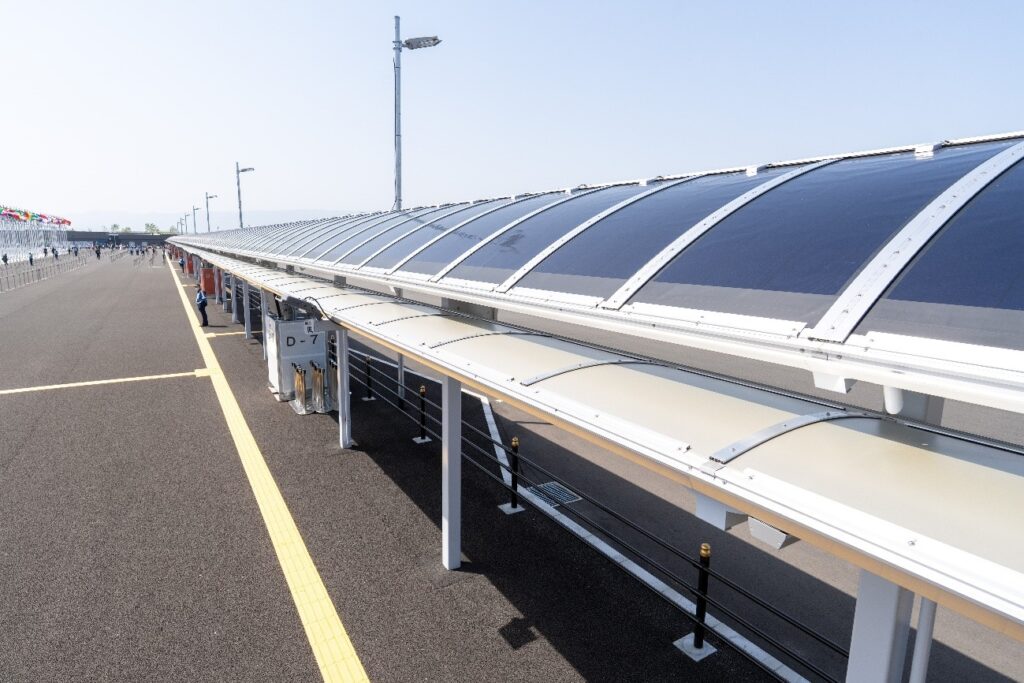
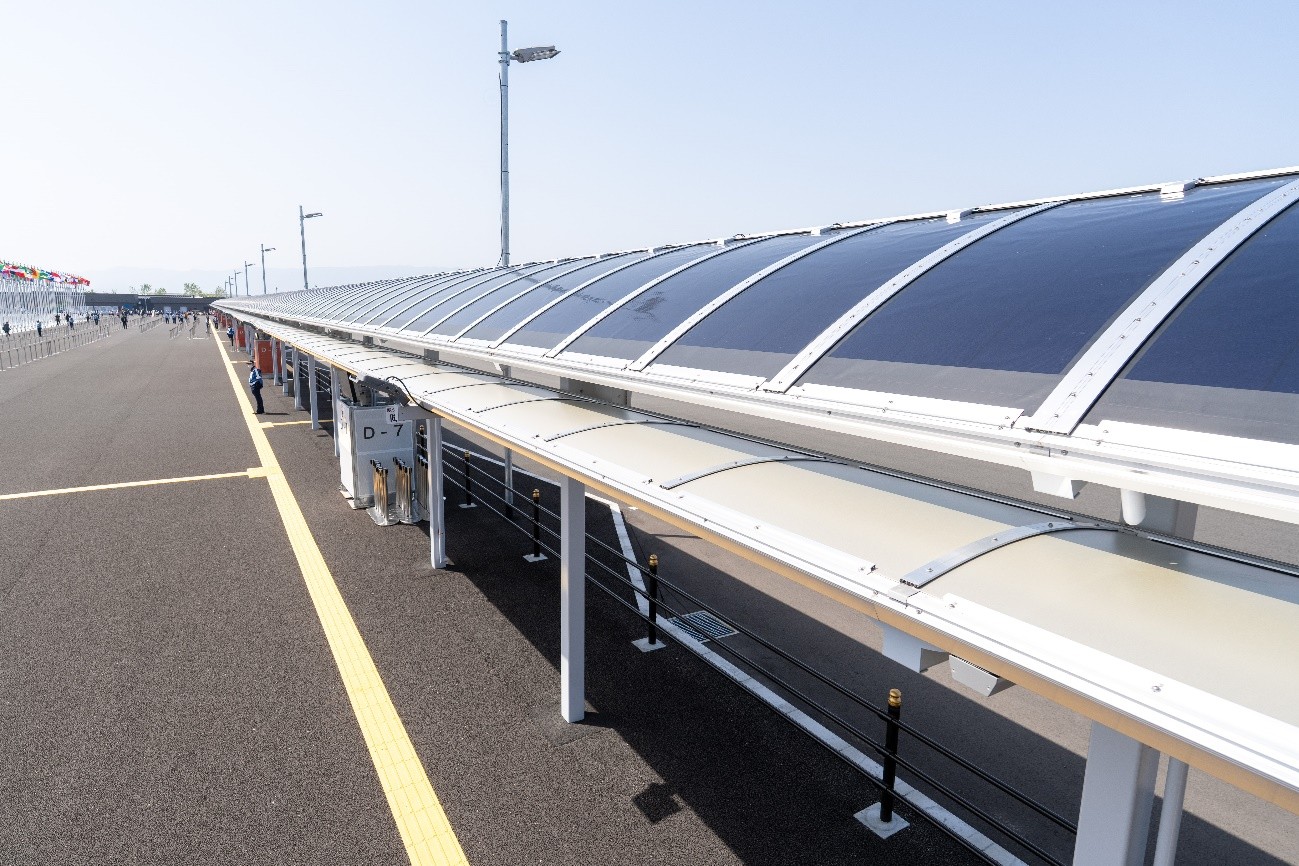
In the non-residential building segment, preferential measures under the FIT introduced in 2023, persistently high electricity prices, and promotion of green electricity under the Energy Conservation Act have led to the gradual spread of PV installations in private-sector buildings, particularly relatively large commercial facilities, factories, and logistics warehouses located in suburban areas. PV deployment has also been proactively advanced in public buildings and infrastructure owned by national and local governments, including airports, roads, and railways.
Participants
New Energy and Industrial Technology Development Organization (NEDO)
Yoshiki NAKAGAWA
Task - 1
Task - 12
University of Miyazaki
Task - 13
National Institute of Advanced Industrial Science and Technology (AIST)
Takashi OOZEKI
Task - 15
National Institute of Advanced Industrial Science and Technology (AIST)
Keiichiro SAKURAI
Photovoltaic Power Generation Technology Research Association (PVTEC)
Akira TERAKAWA
Waseda University
Michiel KONDO
Task - 17
University of Miyazaki
Kenji ARAKI
Waseda University
Toshio HIROTA
Task - 19
New Energy and Industrial Technology Development Organization (NEDO)
Kosuke YAMAMOTO
Yuka OGASAWARA
Tokyo University of Science