20Energy Hubs & Green Hydrogen

Task Managers

Veronika Vancheri

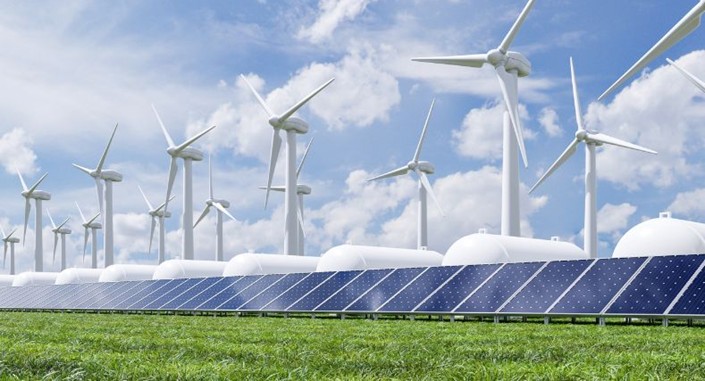
Task 20 is a joint activity between the IEA TCPs Wind, Hydrogen and PVPS. (Photo courtesty of TNO)

As a joint activity by the IEA TCPs Wind, Hydrogen and PVPS, Task 20 was developed in 2025 with the goal of managing data and design information for hybrid wind-solar-hydrogen plants and to recommend the best practices for global integration taking into account location-specific factors. Moreover, it aims to identify local legal and societal challenges as well as to develop the tools to address a variety of potential concerns, thereby improving project viability.

Current Focus Topics

The main focus of Task 20 is the systematic comparison of selected countries’ energy strategies, climate targets, and policy frameworks. We examine how national approaches differ in terms of ambition, implementation mechanisms, and alignment with long-term decarbonisation goals.

Our analysis covers renewable energy deployment trends, energy demand patterns, electricity generation mixes, and the development of grid infrastructure.

A central objective is to evaluate how hydrogen can be produced from renewable electricity and effectively integrated into existing energy systems. We assess the technical feasibility of different production routes, as well as the interaction between hydrogen production and power system operation. In addition, we analyse how regulatory frameworks, market design, economic conditions, and societal acceptance influence market development, investment decisions, and overall project feasibility.

The second part of the work provides a detailed assessment of hydrogen’s role in long-term energy scenarios for the period 2030–2050. Particular attention is given to sector-specific demand in industry, ammonia production, transport applications, and energy storage. We investigate how hydrogen could contribute to decarbonising hard-to-abate sectors and balancing renewable-based power systems.

Furthermore, we explore production pathways, infrastructure requirements, storage and transport options, cost development trajectories, technology maturity levels, and examples of real-world deployment projects.

Taken together, the reports will demonstrate how policy design, infrastructure investment, and technological progress interact to shape the transition from fossil-based hydrogen production to sustainable, low-carbon hydrogen systems.

Read more
2025 Accomplishments

In March 2025, the first Task meeting was held in Rotterdam as a hybrid event and was attended by five members of our team. In September 2025, the second Task meeting took place in Pamplona, also in a hybrid format, with six members of our team participating.

Read more

Subtasks

1Subtask 1 - Project & Information Management

  • Coordinate the data collection and overview of the state-of-the-art technology in hybrid, green hydrogen plants; its research, field trials, demonstration, geographical context and finally commercial activities.
  • Development of a shared database and other tools together with TCP Wind.
  • The leader of this task and work package 1 will closely together with the TCP’s Wind and Hydrogen as the main contact point and assure access and agreement concerning external publications with these TCP’s.
  • • Deliverables: Accessible overview of the research and development, Expert survey results as well as Workshop to discuss and disseminate the results.

2Subtask 2 - Digital Hybrid Plant Design

  • Organize reference designs for each technology in the hybrid wind-solar-hydrogen plant. For each technology, the aim is to get an overview of the available options, their specifications and technology-specific assumptions.
  • Expected dimensions of diversity will be climatic conditions
    (Wind/Solar), on-shore/off-shore and grid connection/storage capacity.
  • The digital tooling for designing and operating such hybrid power plant are an integrated component of the design.
  • Deliverables: Reference technology designs, description of the methodology, repository with the publicly available reference designs.

3Subtask 3 - Energy Hub Use Cases by Country

  • Design options wind-solar-hydrogen plants to perform in specific conditions and sites (hubs).
  • Diversity dimensions are expected along climatic conditions, onshore/off-shore, grid connection/storage capacity, size.
  • Deliverables: Overview design references renewable hydrogen hubs for distinct geographical site and local circumstances, including LCOH, microgrid design, legal framework, infrastructure costs.

4Subtask 4 - Bench-Mark and Best Practices, Synthesis

  • Recommended practices for wind-solar-hydrogen integration into working energy hubs world-wide.
  • Recommendations for future codes, test methods and standardization of renewable hydrogen plants for more universal adoption and comparison.
  • Deliverables; A white paper on the recommended practices for the integration of a wind-solar-hydrogen system. Workshop on design of specifications of integration, control and safety in a renewable hydrogen.

5Subtask 5 - Environmental impact & Spatial Integration

  • Quantify the environmental profile of PV and Wind combined power generation for Green Hydrogen, organized in energy hubs, in comparison to other energy technologies and configuration. A life cycle assessment (LCA) serves this purpose and describes the energy, material and emission flows in all the stages of the hybrid power plant and energy hub.
  • Investigate end of life management options for PV and Wind combined power generation for Green Hydrogen as deployment increases and older systems are decommissioned.
  • Define and address environmental health & safety and other sustainability issues that are important for market growth and include; permits, perceived environmental risks and insurance policies.
  • Deliverables: Papers on the above issues; LCA for hybrid power plants, Lifecycle management and identify possible environment impacts/hazards.

6Subtask 6 - Legal Framework & Societal Issues

  • Inventory of local circumstances and legal requirements for these hybrid energy hubs and the societal issues at hand. It will provide tools and checklists for setting such building blocks for a renewable energy system, based on best practices from different regions and configurations.
  • The overall goals are to facilitate collaboration with local stakeholders, to lower both project development costs and lead time and finally to enhance bankability.
  • Deliverables: Toolbox with check list and best practices for setting up energy hubs. Check lists and templates for the different type of contracts needed for energy hubs; stakeholders, grid operators, technology suppliers, use of assets etc.