2025 Country Update

National PV Policy
Following the early presidential election in June 2025 after the impeachment of the former president, a new government was established in Korea and national energy policy was redefined.
The new administration has positioned climate crisis response and energy security as central priorities. As part of institutional restructuring, the Ministry of Climate, Energy and Environment (MCEE) was established to integrate climate and energy policy functions and strengthen coordination for carbon neutrality and energy transition. The 2035 Nationally Determined Contribution (NDC) was also finalized, setting a greenhouse gas reduction target of 53–61% compared to 2018 levels.
Regarding the energy transition, the priorities are large-scale renewable energy expansion and the gradual phase-out of coal-fired power generation. The plan targets 100 GW of renewable energy capacity by 2030, focusing on solar PV and wind power. Solar PV deployment is expected to accelerate through regulatory reforms, including relaxed setback requirements and the expansion of agrivoltaics. Reducing generation costs remains a key objective, with long-term targets of approximately KRW 100/kWh for solar PV and below KRW 250/kWh for offshore wind.
Power system transformation is another key component of the policy framework. An AI-based “Energy Expressway” has been proposed to strengthen transmission networks and improve renewable integration. Korea also aims to transition towards a distributed power system based on local production and consumption, supported by region-based electricity pricing.
- Establishment of the Ministry of Climate, Energy and Environment (MCEE). MCEE was launched on 1 October 2025 through the consolidation of energy-related functions from the Ministry of Environment (ME) and the Ministry of Trade, Industry and Energy (MOTIE), marking the most significant restructuring of Korea’s climate and energy governance in over three decades. It serves as the central authority for carbon neutrality, energy transition, and climate crisis response, covering electricity, renewable energy, parts of the nuclear sector, and hydrogen. Its 2026 budget is approximately KRW 19.17 trillion (+9.9% YoY), and it also manages the Climate Response Fund.
- “Energy Expressway”. As a key national infrastructure project, the government has proposed the development of an “Energy Expressway” to support large-scale renewable energy expansion. The plan includes approximately 20 GW of offshore wind transmission capacity along the west coast by 2030 and a U-shaped offshore transmission network across the Korean Peninsula developed by 2040. It also involves the introduction of AI-based intelligent grid systems to better integrate distributed renewable energy. Grid flexibility will be enhanced through the deployment of 2.3 GW of energy storage systems (ESS) by 2029 and the promotion of virtual power plants (VPPs).
- “Sunlight and Wind Pension”. Community-based renewable energy models are being promoted through the “Sunlight and Wind Pension” scheme, which distributes revenues from solar and offshore wind to local residents. Building on the model in Shinan County, similar programs are being expanded nationwide. From 2026, more than 500 “Sunlight Income Villages” will be developed annually across approximately 38,000 rural administrative units.
- Promotion of RE100 industrial Complexes. Renewable electricity–based industrial complexes are being promoted to support corporate RE100 commitments. A task force was launched in July 2025, followed by a Special Act proposal in October. Financial support for rooftop solar has been expanded, increasing the subsidy ceiling from 100 kW to 200 kW in 2025.
- Expansion of Zero Energy Building (ZEB) Requirements. ZEB mandates are being progressively expanded. Since 2025, ZEB Grade 4 applies to buildings larger than 1 000 m² and designated categories. From December 2025, private buildings over 1 000 m² must meet ZEB Grade 5–equivalent standards, including renewable energy systems, driving BIPV demand.
- Mandatory Installation of Renewable Energy Systems in Public Parking Lots. Public parking lots (≥1,000 m²) must have installed renewable energy systems of at least 100 kW under revised regulations effective November 2025. The policy aims to expand urban renewable deployment and improve land-use efficiency, supported by MCEE guidance.
- Agrivoltaics Special Act. A special act on agrivoltaics is being prepared for 2026 to enable solar deployment on farmland while maintaining agricultural production. The framework extends temporary land use from 8 to up to 23 years, with eligibility limited to actual cultivators and cooperatives.
- Special Act on National Resource Security. The Resource Security Council, launched in December 2025, serves as the central body for resource security policy. It covers a wide range of strategic resources including renewable energy and will establish a 10-year master plan every five years, with the first scheduled for 2026.
Research, Development and Demonstration
The 5th Energy Technology Development Plan (2025–2034) was established as a mid- to long-term strategy for energy technology R&D to achieve carbon neutrality and strengthen energy security.
Following the roadmap announcement in December 2024, the plan was finalized in 2025 after inter-ministerial consultations. It aims to accelerate the energy transition and enhance global competitiveness through renewable expansion, power system innovation, and clean energy technologies. Key areas include advanced solar and wind technologies, green hydrogen via water electrolysis, next-generation grids and energy storage systems (ESS), small modular reactors (SMRs), and distributed digital-based energy systems.
The solar PV roadmap focuses on strengthening competitiveness in next-generation photovoltaic technologies. Early commercialization of tandem solar cells is a key priority to secure ultra-high-efficiency PV and enhance global competitiveness. The roadmap also promotes expanded applications—including BIPV, floating PV, and agrivoltaics—supporting the transition to distributed energy systems. It further emphasizes digital-based O&M technologies to improve efficiency and reliability, along with lifecycle carbon reduction through recycling and circular economy approaches.
Following the new administration, the “Ultra-Innovative Economy” concept and the “15 Ultra-Innovative Leading Projects” were introduced to strengthen industrial competitiveness and future growth engines. Announced between September and November 2025, the projects are grouped into advanced materials and components, climate and energy sectors, and K-Boom-Up industries. They include power semiconductors, LNG containment systems, superconductors, graphene, specialty steel, solar and next-generation grids, offshore wind and HVDC, hydrogen and SMRs, as well as smart agriculture, fisheries, satellite applications, and K-industries (e.g., bio, content, beauty, and food). The initiative is supported by policy packages covering R&D, workforce development, finance, overseas expansion, and regulatory reform.
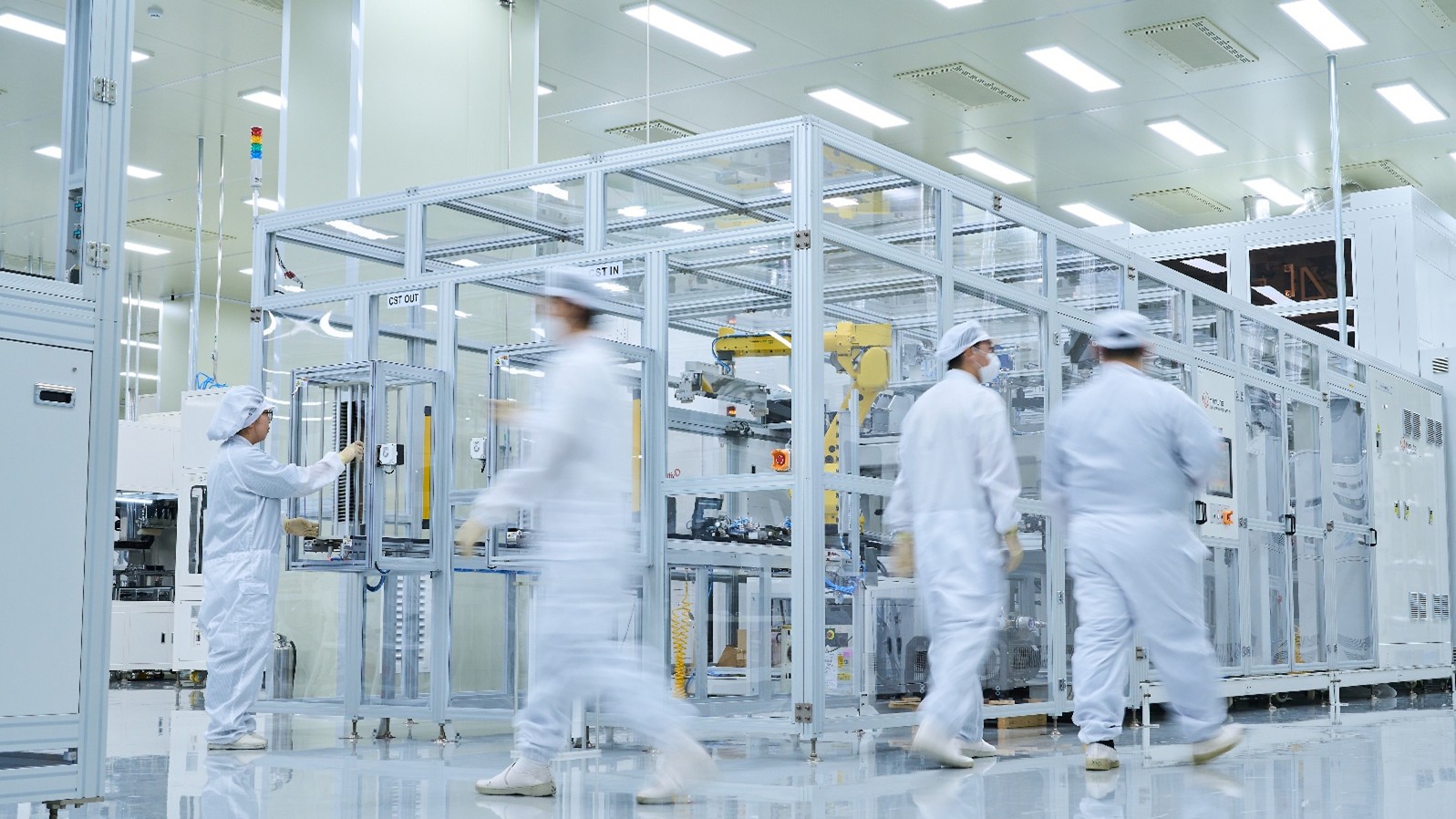
Within this framework, solar PV aims to strengthen industrial competitiveness through next-generation technologies. R&D is being intensified to achieve global leadership in tandem solar cell commercialization within five years, targeting approximately 35% cell efficiency and 28% module efficiency. The initiative also promotes value chain collaboration—materials, equipment, cells, and modules—to enhance technological self-reliance and industrial capacity.
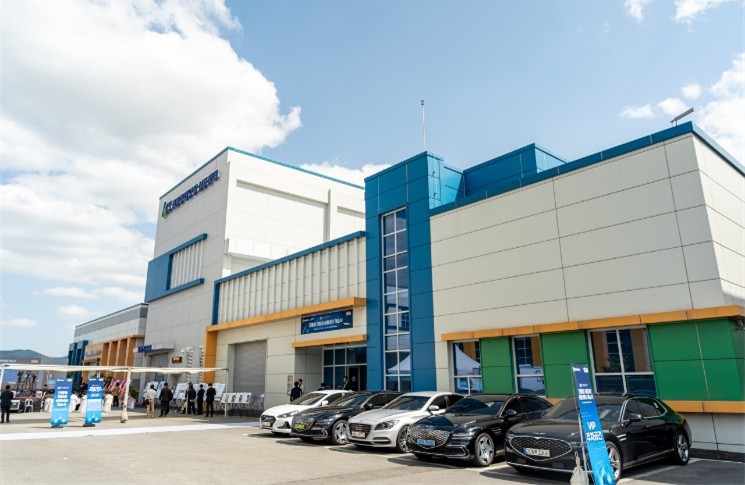
- Opening of the BIPV Demonstration Center (so-called “Building-type Solar Power Verification Test Facility”). On April 21, 2025, the BIPV Demonstration Center was inaugurated in Eumseong, providing integrated testing, certification, and performance evaluation for BIPV systems. Established under the BIPV Infrastructure Development Project (2022, MOTIE), it involves an investment of approximately KRW 13.98 billion. Built on a 13 573 m² site (1 530 m² floor area), the facility includes integrated evaluation, fire, and structural testing units. It is equipped with 14 testing systems covering electrical, structural, and fire performance. Led by KETEP and KCL, with participation from Chungbuk Technopark, KTL, and universities, the center provides one-stop evaluation services, reducing development costs and supporting the BIPV ecosystem and ZEB deployment.
- Newly launched solar PV R&D projects. In 2025, several solar PV R&D projects were initiated in line with the roadmap. These include ultraviolet down-conversion encapsulant films for tandem and HJT modules; testing methods and standardization for perovskite/silicon tandem modules; and environmentally friendly recycling technologies. Additional projects focus on high-power zero-busbar (0BB) modules to reduce silver use, degradation mitigation technologies for stable outdoor operation, lifecycle management technologies, balcony plug-in modules, and PV recycling and resource recovery. Further initiatives include mobile recycling systems, global demonstration projects, and greenhouse gas reduction assessment platforms that integrate PV deployment potential analysis with power system modeling.
- R&D activities at the Centre for Advanced Solar PV Technology (CAST). CAST serves as an open R&D platform integrating industry, academia, and research institutes. Following the successful validation of high-efficiency solar cell and module technologies using domestically developed equipment, it now focuses on next-generation PV technologies and their commercialization in line with the national roadmap. CAST conducts research on tandem solar cells and projects on low-carbon, recyclable module materials and processes in collaboration with KETI, KITECH, Chungbuk Technopark, Wonkwang S&T, and Shinsung E&G, among others. In partnership with organizations such as Hanwha Solutions, KTL, KOES, Hojeonable, and KENTECH, it is advancing initiatives including 0BB modules, tandem module testing and evaluation systems, electrode materials for high-efficiency solar cells, and the investigation of degradation mechanisms.
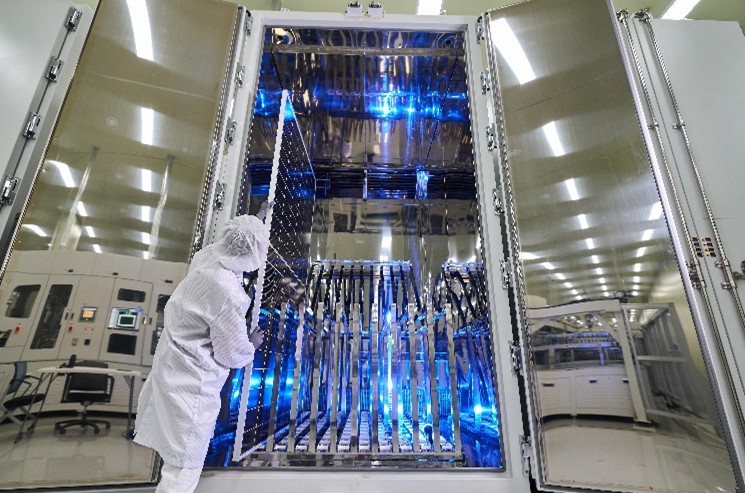
CAST (KIER) also leads international joint research through a Korea–Switzerland program in collaboration with CSEM (Swiss Center for Electronics and Microtechnology), involving industrial partners Fluxim and TNETech under the “MetroPero” project. In addition, by utilizing its silicon solar cell manufacturing processes, CAST verifies the performance of domestically developed deposition equipment, thereby supporting exports through its role as a demonstration platform.
Industry and Market Development
As of 2024, cumulative installed solar capacity in Korea reached 32 GW , of which 27.4 GW (approximately 86%) was accounted for by power generation businesses.
Residential installations represented 2.5 GW (8%), industrial and commercial applications 1.7 GW (5%), and other uses 0.3 GW (1%). By system size, approximately 14 GW (43.6%) correspond to systems of 100 kW or less, about 12 GW (38.1%) to systems between 100 kW and 1 MW, and around 5.8 GW (18.2%) to systems larger than 1 MW. These figures are based on Renewable Energy Deployment Statistics published by the Korea Energy Agency (KEA) and reclassified by application category. While power generation businesses dominate, small- and mid-scale systems still account for a significant share of total capacity, with systems larger than 20 MW representing only about 1.9 GW (approximately 6%).
Given current policy directions, evolving market structures, the 100 GW renewable energy target by 2030, and the Korea Green Transformation (K-GX), solar PV deployment is moving beyond simple capacity expansion toward rapid growth accompanied by structural transformation. Solar PV is increasingly positioned as a core component of the national energy transition. The 100 GW target represents a substantial increase from current capacity and requires a significant rise in annual installations. To support this, comprehensive measures—including electricity market reform, grid expansion, regulatory easing, and demand-side policies—are being implemented, signaling a shift from gradual growth to policy-driven acceleration. K-GX reinforces this transition by linking renewable expansion with industrial decarbonization, electrification, and grid modernization, positioning solar PV as key infrastructure for industrial competitiveness. The transition to a contract-based market is expected to improve investment stability and enable more planned expansion, supporting both large-scale and distributed systems. In parallel, grid enhancements will alleviate curtailment and congestion, while siting policies and community-based models diversify deployment and strengthen social acceptance.
Looking ahead, more detailed deployment pathways and targets will be presented in the forthcoming 12th Basic Plan for Long-term Electricity Supply and Demand (2026–2040). Overall, the solar PV market in Korea is expected to evolve into a dual-structure system, in which both large-scale and distributed installations expand under a contract-based market and grid-centered framework, with development strongly guided by policy planning.
- Electricity Market and Tariff Reforms. The Renewable Portfolio Standard (RPS) will be phased out by the end of 2026 and replaced by a contract-based procurement system based on competitive auctions and long-term contracts. Auction volumes will be set by energy source to support planned capacity expansion. The REC spot market will be gradually phased out, with a transition period for existing projects until around 2029. Facilities commissioned from 2027 onward will no longer be eligible for RECs and will instead participate in contract markets or power purchase agreements (PPAs). The current SMP + REC structure is expected to transition to a contract-for-difference (CfD) mechanism. Additional measures, including dedicated auction tracks for small-scale projects, virtual power plants (VPPs), and Renewable Energy Service Companies (ReSCOs), will broaden market participation.
- NDC 2035 and the Korea Green Transformation (K-GX). The 2035 NDC, targeting a 53–61% reduction in greenhouse gas emissions from 2018 levels, was finalized in November 2025. As a follow-up, K-GX was introduced as an implementation strategy, with detailed plans to be developed by the first half of 2026. Industry consultations began in late November 2025, and MCEE defined K-GX as a whole-of-economy transition strategy focused on renewable expansion, grid modernization, industrial decarbonization, and electrification. A public–private task force was launched in January 2026, followed by inter-ministerial coordination in March to develop sectoral pathways and supporting R&D, financial, and regulatory frameworks.
- Initiation of the 12th Basic Plan for Long-term Electricity Supply and Demand (BPLE 12). On 27 November 2025, MCEE initiated preparation of BPLE 12 (2026–2040). The plan will reflect recent developments, including the new administration’s policy agenda, the 2035 NDC, and rising electricity demand driven by AI industries and electrification. It aims to improve demand forecasting and establish a carbon-free–oriented power mix, while outlining key directions such as renewable expansion and coal phase-out. Supporting measures include grid expansion, enhanced system flexibility, demand decentralization, and electricity market reform.
Participants
Korean Energy Agency (KEA)
Youngjun HEO
Task - 1
KENTECH
Jae-Ho YUN
Task - 15
Kongju National University