2025 Country Update
National PV Policy
South Africa’s photovoltaic (PV) deployment is guided by national electricity planning and renewable energy procurement policies.
Central policy instruments include the Integrated Resource Plan (IRP 2025), which outlines the country’s long-term electricity capacity expansion pathway, and the Renewable Energy Independent Power Producer Procurement Programme (REIPPPP). The IRP establishes targets for renewable energy capacity in the national generation mix, while the REIPPPP provides the procurement mechanism through which privately developed renewable energy projects are competitively selected and contracted. Together, these frameworks support the diversification of South Africa’s historically coal-dominated electricity sector and aim to improve energy security while reducing greenhouse gas emissions.
The REIPPPP, launched in 2011, is South Africa’s flagship renewable energy procurement programme and has been internationally recognised as one of the most successful renewable procurement programmes in emerging economies. Through a series of competitive bidding rounds (“Bid Windows”), independent power producers develop utility-scale solar PV and other renewable energy projects, which sell electricity to the national grid under long-term power purchase agreements (PPAs). The programme has enabled substantial private sector investment and contributed significantly to the deployment of utility-scale solar PV capacity in South Africa.
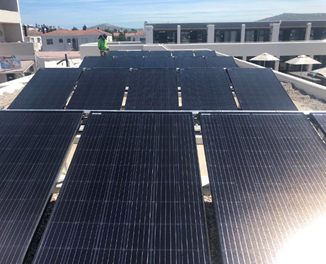
In addition to utility-scale deployment, recent regulatory reforms have facilitated the growth of distributed generation and rooftop PV systems. These include the removal of licensing requirements for embedded generation projects below certain capacity thresholds and fiscal incentives such as temporary tax rebates for residential rooftop solar installations. The government has also introduced initiatives aimed at strengthening grid infrastructure and enabling greater integration of renewable energy into the national power system.
Public perception of solar PV in South Africa has become increasingly positive, largely driven by persistent electricity supply shortages and recurring load-shedding events. As a result, households, commercial entities, and industrial consumers have increasingly adopted rooftop PV systems to improve energy security and reduce reliance on the national grid. This rapid growth in distributed generation has been complemented by ongoing investments in utility-scale solar PV projects under the REIPPPP. Consequently, in recent years South Africa has emerged as one of the largest solar PV markets on the African continent.
The future outlook for solar PV in South Africa remains strong, supported by continued policy commitment to renewable energy expansion, evolving regulatory frameworks for distributed generation and increasing private sector participation in the electricity market. Planned updates to the IRP are expected to further expand the role of solar PV in the national energy mix, while complementary investments in transmission infrastructure and energy storage will be essential to support higher levels of renewable penetration. Overall, solar PV is expected to play a central role in South Africa’s transition toward a more resilient, diversified, and lower-carbon electricity system.
Research, Development and Demonstration
South Africa’s renewable energy RD&D agenda is aligned with national energy transition goals and guided by strategic frameworks such as the Science, Technology and Innovation (STI) energy programmes.
These initiatives aim to support the development, localisation and deployment of solar and other renewable technologies while reducing dependence on fossil fuels. In addition, the national R,D&D agenda is closely linked to broader energy system transformation goals outlined in the IRP, recognising the role of innovation in enabling transition to a diversified and low-carbon electricity system.
Several national programmes support renewable energy innovation, typically coordinated by the Department of Science, Technology and Innovation (DSTI), the South African National Energy Development Institute (SANEDI), Universities and Science Councils. Key initiatives include the Renewable Sustainable Energy (RSE) Hub and Spokes programme promoting collaboration between universities and research institutions to advance renewable energy technologies and commercialisation of publicly funded intellectual property. Applied research initiatives also address system-level challenges associated with increasing renewable penetration. Projects supported by SANEDI and academic partners are investigating advanced grid planning tools, hosting capacity limits and operational strategies for integrating distributed energy resources such as rooftop PV, electric vehicles and battery storage into municipal distribution networks. In parallel, research collaborations between universities and SANEDI are exploring renewable energy integration with emerging technologies such as green hydrogen production, including the use of solar-generated electricity to power electrolyser systems.
Recent research efforts have focused on improving technical performance and economic competitiveness of solar technologies and enabling large-scale integration of renewable energy into the national electricity system. Key highlights include modelling studies on renewable energy system planning and grid integration, experimental studies on PV module performance under local climatic conditions, and analysis of solar PV and battery storage value chains to identify opportunities for industrial development and localisation within South Africa’s renewable energy sector.
South Africa’s renewable energy R,D&D strategy prioritises several key areas, including:
- Grid integration and system flexibility
- Localisation and industrial development of solar PV and energy storage value chains
- Hybrid energy systems viz. sector coupling between electricity, transport, and industrial applications
- Distributed energy systems, such as microgrids and municipal-scale energy management solutions.
- Advanced modelling and energy system planning, to support long-term decarbonisation pathways and infrastructure development.
Industry and Market Development
South Africa has the largest solar photovoltaic (PV) market in Africa, with rapid expansion over the past decade driven by supportive policy frameworks, declining technology costs and persistent electricity supply constraints.
Utility-scale PV deployment has been largely enabled through the REIPPPP, which has attracted significant international and domestic investment in solar projects. In parallel, a growing ecosystem of local installers, engineering firms, and service providers has emerged to support the increasing demand for distributed and rooftop PV systems.
Solar PV is playing an increasingly important role in South Africa’s electricity system as the country seeks to diversify its historically coal-dominated generation mix. Utility-scale solar plants contribute to grid-connected renewable generation, while distributed PV systems support energy resilience for households and businesses. National energy planning frameworks anticipate a continued increase in solar PV capacity as part of the country’s long-term energy transition. The PV market is characterised by strong growth across both utility-scale and distributed generation segments. Large-scale projects continue to be procured through national programmes and private power purchase agreements, while the commercial and industrial sector has become a key driver of market expansion. Residential rooftop PV adoption has also increased significantly in response to electricity supply instability and rising energy costs.
Photovoltaic–thermal (PVT) technologies that simultaneously generate electricity and heat from a single solar collector, present significant potential for deployment in South Africa due to the country’s high solar resource, strong demand for both electricity and thermal energy and growing interest in integrated energy solutions. Compared with many international markets, South Africa has seen relatively strong uptake and interest in PVT, particularly in applications where electricity generation can be combined with water heating or low-temperature process heat. The technology is particularly relevant for residential, commercial and industrial sectors where energy costs and supply constraints have encouraged the adoption of distributed renewable systems. PVT systems can improve overall solar energy utilisation by increasing total energy yield per unit of collector area, this is advantageous in urban environments with limited rooftop space. In addition, the ability to provide both electrical and thermal energy aligns well with national energy efficiency and decarbonisation objectives.
The outlook for South Africa’s PV sector remains positive, supported by continued renewable energy procurement, private sector investment, and growing demand for reliable electricity supply. Future market expansion will depend on improvements in grid infrastructure, regulatory clarity, and the integration of storage technologies to accommodate increasing levels of solar generation.