2025 Country Update
National PV Policy
Türkiye’s 2025 PV policy framework has been shaped in alignment with the long-term energy transition targets set out in the National Energy Plan.
The target of reaching a total installed capacity of 120 GW based on solar and wind energy by 2035 has continued to serve as the primary reference point for policy design. The policy approach has centered on maintaining the rate of capacity growth, ensuring the safe grid integration of increasing renewable generation, expanding generation models integrated with storage, and deepening the domestic manufacturing value chain. This approach points to a policy architecture that simultaneously pursues not only capacity growth but also system flexibility and industrial policy objectives.
By the end of 2025, Türkiye’s total installed electricity capacity reached 122.5 GW, while solar energy installed capacity surpassed 25 GW. The majority of solar energy capacity has been commissioned under the unlicensed generation model, particularly through commercial and industrial (C&I) self-consumption investments. This demonstrates that the investment dynamics of PV market in Türkiye are predominantly shaped by a growth model focused on distributed generation and consumption.
The Renewable Energy Resource Areas (YEKA) model continued to be used for solar energy capacity allocation in 2025. Under YEKA SPP-2025, a competitive tender process was conducted for a total of 650 MW of capacity across eight separate competition zones, with a floor price of 3.25 Euro-cent/kWh and an initial ceiling price of 5.50 Euro-cent/kWh. The contract model reflects a hybrid risk-sharing approach that balances investor returns with long-term financing security by combining an initial five-year market-exposed period with a subsequent twenty-year purchase guarantee.
Throughout 2025, regulatory adjustments to the electricity market design concentrated particularly on self-consumption, storage, and system flexibility. Amendments to the Regulation on Unlicensed Electricity Generation restructured application, technical assessment, and grid connection priority procedures; made the central preparation of technical evaluation reports mandatory; and clarified the criteria to be applied in cases of capacity constraints. Provisions related to capacity increase applications, plant transfers, and the treatment of surplus generation were updated to make the unlicensed generation framework more predictable and to strengthen technical compatibility with the grid[1].
In 2025, the regulatory infrastructure for floating solar power plants was established, and the application, technical evaluation, and permitting processes for facilities to be built on water surfaces were defined. This regulation is considered an important policy step in terms of reducing land use restrictions and opening up new areas of application. Floating PV applications have the potential to increase resource diversity by enabling the use of existing reservoirs and dam areas for energy production. Finally, the first YEKA Floating PV tender is planned for the Demirköprü hydroelectric power plant reservoir area in Manisa province, with a capacity of 35 MW.
Amendments to the Regulation on Electricity Market Storage Activities enabled the installation of storage facilities within unlicensed renewable generation plants. Settlement and payment principles for electricity supplied to the grid from storage systems were defined, and the participation framework of storage facilities in ancillary services and
balancing markets was clarified. These measures have strengthened the role of storage-integrated solar systems in enhancing system flexibility and renewable integration. In addition, lowering the annual consumption threshold for the last-resort supply tariff for residential consumers from 5 000 kWh to 4 000 kWh aims to expose high-consumption households earlier to market price signals and encourage demand-side participation.1
Increasing solar energy capacity is turning electricity grid management into a critical issue and introducing storage-based power plants using different technologies as an alternative. According to data from the Energy Market Regulatory Authority (EMRA), some of the projects that received preliminary licenses under the 33 GW storage-integrated generation capacity allocation announced in 2022 have progressed to the licensing stage, and by the end of 2025 the first storage-integrated solar power plant had been commissioned. This development indicates a growing investment trend toward the co-planning of generation facilities with storage. The regulatory framework continues to be implemented in a manner that supports applications contributing to the system integration of renewable energy generation.
Research, Development and Demonstration
Research and development activities in the field of PV in Türkiye throughout 2025 continued to focus on high-efficiency cell technologies, improvement of production processes, cost efficiency, and technical studies on grid integration.
. The activities were carried out by universities, public research institutions, and industrial companies, and efforts were made to ensure coordination between research and industrial application areas.
During 2025, the Turkish Energy, Nuclear and Mineral Research Agency (TENMAK) continued its research and support activities for solar energy technologies. In this context, a project call titled “Solar Energy System Technologies” was published under the Technology and Product Development Projects Support Program, aiming to support the domestic production of photovoltaic system components, high-efficiency cell technologies, and innovative applications. In addition, technical studies have been initiated on the integration of solar power plants with storage systems. Furthermore, TENMAK organized a “Workshop on Circularity and Recycling in the Turkish Photovoltaic Sector.” Within the scope of the workshop, industry representatives, public institutions, and technical experts came together to comprehensively address the assessment of photovoltaic technologies from a circular economy perspective, end-of-life management, the technical and economic dimensions of recycling processes, and the regulatory and policy needs in this area.
TENMAK Clean Energy Research Institute (TEMEN) launched a solar panel and battery recycling project in 2025. Technical studies have been carried out to ensure that the recycling process is environmentally friendly and cost-effective, as well as to identify the work needed to scale up from R&D-level investments to pilot and industrial scale. Considering the rapidly increasing number of solar power plant installations in Türkiye as of 2015 and the technologies of the period, forecasting studies have been initiated for power plants with recycling potential over the next decade.
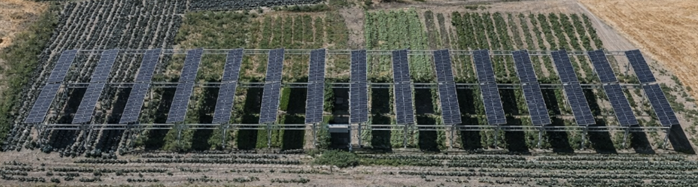
The Center for Solar Energy Research and Applications (ODTÜ-GÜNAM) has assumed a role contributing to the strengthening of knowledge transfer between both the fundamental scientific dimensions of PV technologies and industrial application domains through nationally supported projects and international collaboration activities. An invention developed by the Center’s researchers was awarded a gold medal at the ISIF’25 International Invention Fair held in September 2025. This activity is noteworthy in terms of the development of innovations related to module manufacturing processes and their presentation on international platforms. Furthermore, the Center received support for three projects under the “Cluster 5” calls within the European Union’s Horizon Europe programme; these projects cover R&D-focused areas such as high-efficiency cell technologies and system integration. This development contributes to the integration of Turkey’s research capacity with European research networks. Within the scope of demonstration activities, AgriPV pilot projects were carried out by the Center in Ankara-Ayaş, Kayseri-Erciyes, and Bursa-Mustafakemalpaşa, where the integration of single-axis tracker systems with agricultural production was tested. These studies are of strategic importance in terms of increasing the diversity of PV applications and optimizing land-use efficiency.
Forecasting systems for grid integration were another key focus of R&D efforts in 2025. Efforts were made to develop a solar energy production forecasting system in line with the requirements of Türkiye Elektrik İletim A.Ş. (TEİAŞ), the electricity grid operator in Türkiye. The project aimed to develop a forecasting infrastructure at the national and power plant basis and to monitor accuracy levels through performance indicators. This type of project contributes to managing the effects of increasing PV capacity on system operation.
Industry and Market Development
By 2025, Türkiye's photovoltaic market, which has surpassed 25 GW of installed capacity, has continued its trend of capacity growth.
According to data from TEİAŞ, 4 694 MW of new solar energy capacity was commissioned in 2025. Of the new installations, 4 175 MW came from unlicensed production facilities and 521 MW from licensed power plants. At the end of the year, unlicensed solar installed capacity reached approximately 22 500 MW, while licensed solar installed capacity reached 2 540 MW. This distribution shows that growth has largely progressed through self-consumption and distributed generation models.
In 2025, the strategic orientation of Türkiye’s PV industry focused on increasing domestic solar cell manufacturing capacity, commercializing advanced cell technologies, and establishing an integrated PV value chain within the framework of the HIT-30 High Technology Investment Programme. The HIT-30 PV Workshop, held at ODTÜ-GÜNAM, strengthened public–industry–academia collaboration on domestic cell capacity targets, the industrial scalability of high-efficiency technologies such as TOPCon, and the reduction of dependency on critical materials.
In terms of industrial capacity, Türkiye ranks among the countries in the European region possessing gigawatt-scale module manufacturing infrastructure. Although the current production structure is predominantly concentrated at the module assembly level, the announcement of new investment plans in 2025 aimed at expanding both cell and module manufacturing capacity signals a strengthening of the integrated production model (cell and module). These developments demonstrate the continuation of scaling-up trends within the industrial structure, aimed at deepening the domestic supply chain and supporting technological modernization.
The policy framework for domestic production has become clearer in 2025. Raising the import surveillance reference values applied to product groups such as photovoltaic cells and wafers to USD 170/kg demonstrates the strengthening of trade policy instruments aimed at protecting domestic production.1 Under the YEKA GES-2025 regulations, a minimum local content requirement of 75% for solar modules and at least 51% for DC cables, carrier structures, and inverter equipment has been defined. This regulation establishes a direct link between capacity allocation and domestic production obligations. Furthermore, investment incentive applications now require that solar panels be manufactured from domestically produced cells and that panel carrier construction systems be domestically produced. This approach demonstrates that incentive mechanisms are structured to cover not only final assembly but also the cell production stage. Furthermore, the updating of import surveillance practices for PV cell and wafer products has been evaluated within the scope of trade policy instruments supporting domestic cell production investments. The joint consideration of domestic content ratios, investment incentives, and surveillance practices reveals a policy framework aimed at creating a more integrated structure in the production chain.
With the definition of the administrative and technical framework for PV installation on water surfaces, floating PV projects have begun to be included in capacity allocation mechanisms. Considering potential benefits such as reduced land use constraints, evaluation of existing reservoir and dam areas, and reduced evaporation losses, floating PV applications are considered a complementary area for the expansion of PV capacity in Türkiye.
On the cost side, price increases observed in the global PV supply chain became particularly pronounced in the TOPCon module and n-type wafer segments. Reference prices for TOPCon modules increased to approximately USD 0.115/Wp, while n-type wafer prices rose by more than 10%.1 The increase in silver prices affected cell manufacturing costs. These developments have also influenced investment costs in Türkiye, which remains sensitive to global equipment and raw material prices, demonstrating the continued integration of the domestic market with the international PV value chain.
Overall, 2025 has been a period of continued progress in Türkiye’s PV sector, both in terms of installed capacity growth and the development of domestic manufacturing capacity. The simultaneous advancement of capacity expansion, industrial investments, and new application areas indicates that the market is undergoing a multidimensional development process.