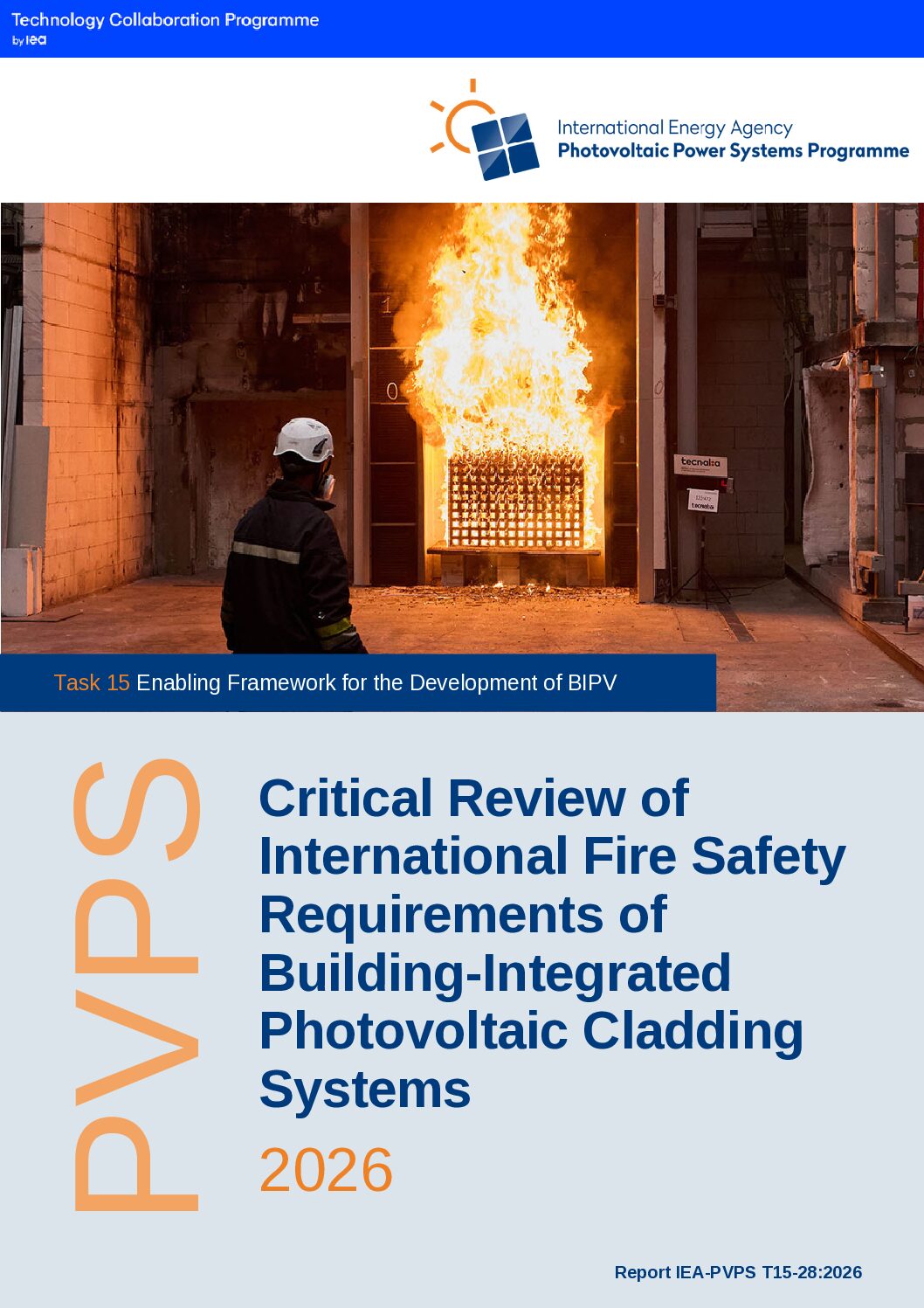
The report Critical Review of International Fire Safety Requirements of Building Integrated Photovoltaic Cladding Systems draws on a structured survey of experts from ten countries, complemented by a comparative review of applicable codes, standards and test methods.. It examines both material- and system-level requirements and considers the additional challenges created when PV modules serve simultaneously as building envelope components and electrically active energy-generating systems.
The analysis finds that BIPV façades are currently assessed largely through regulations and standards developed for conventional façade materials. While these provide an important foundation, they do not fully address BIPV-specific fire scenarios, including electrical ignition, fire propagation within façade cavities, operation under energized conditions, and risks associated with firefighting.
The report highlights the need to move beyond material-level assessment alone towards system-level, risk-based approaches that consider the complete façade configuration, electrical components, operating conditions and the overall building fire strategy. It also identifies opportunities to harmonise international test methods, and performance criteria to provide clearer compliance pathways for BIPV.
Key Takeaways:
- BIPV cladding introduces unique fire hazards beyond conventional façades, including electrical ignition sources, energized operation, cavity-fire scenarios involving electrical components, and water-based firefighting risks.
- Current BIPV cladding fire safety assessments largely rely on existing building regulations and standards which provide a foundation but do not fully address BIPV-specific hazards.
- Material-level requirements influence the application of BIPV technologies, in some countries limiting the use of certain module configurations.
- System-level risk-based assessment is essential, considering cavity design, electrical components, operational conditions, and mitigation measures to enable safe BIPV integration.
- Harmonized international standards, test methods, and performance criteria are needed to support consistent regulation and recognize BIPV as an electrically active façade system with fire safety considerations beyond conventional cladding.
The report provides a baseline for regulators, manufacturers, designers and researchers working to improve fire safety requirements while supporting the broader deployment of BIPV systems in the built environment.