January 2026
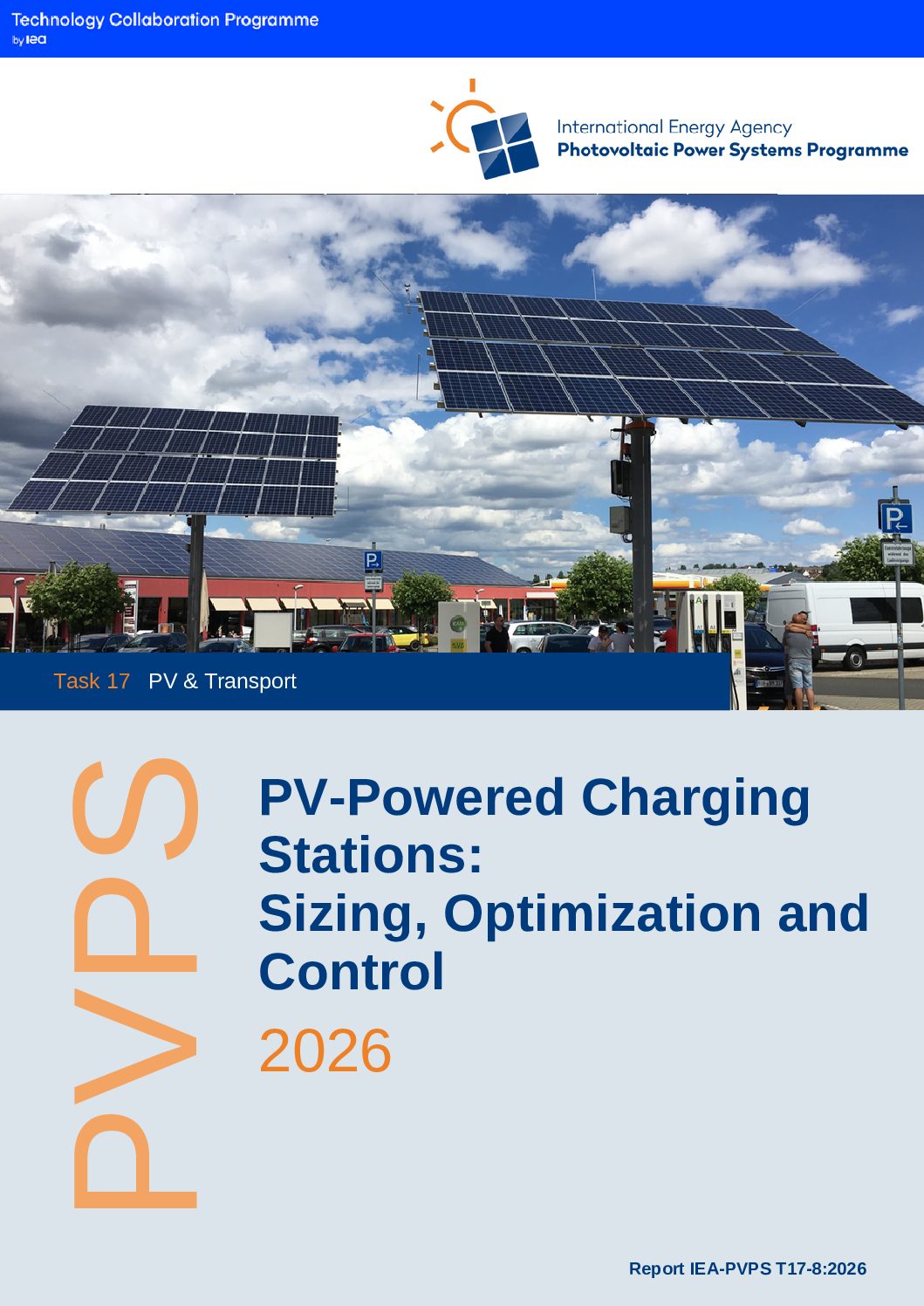
This report provides an in-depth technical analysis of PV-powered charging stations (PVCS), which combine on-site solar electricity generation with electric vehicle (EV) charging infrastructure. These systems are increasingly deployed in urban and rural environments as part of the integration of PV into transport and energy systems.
The effective deployment of PV-powered charging stations requires careful system design beyond the installation of PV modules and charging points, including proper sizing of PV installation and battery storage, optimised energy management among PV systems, the grid and EVs, and the implementation of smart charging control strategies.
The report explores the deployment of PV-powered charging stations within microgrid-based architectures, focusing on the integration of intelligent energy management and charging control systems, as well as the incorporation of emerging services such as Vehicle-to-Grid (V2G) and battery swapping. It also considers the specific requirements and challenges related to charging electric buses with solar energy, using advanced modelling approaches to assess technical, economic and environmental trade-offs under different site conditions.
“Harnessing the sun to power electric vehicles is no longer a concept—smartly designed solar charging stations are driving the future of sustainable mobility.” (Amalie Alchami, editor of the report)
Key Findings
· Photovoltaic-powered charging stations can significantly reduce emissions and energy costs when optimally sized and managed.
· Smart charging strategies, including V2G services, improve grid flexibility and maximise solar energy utilisation.
· Deployment across different contexts—such as workplace charging, microgrids or electric bus applications—requires tailored design choices that balance technical, economic and environmental objectives.
Supporting PV Integration in Transport
By providing harmonised methodologies, case studies and quantitative insights, the report supports stakeholders involved in the planning, design and operation of PV-powered charging infrastructure. It contributes to a better understanding of how PV can be effectively integrated into charging systems for passenger vehicles and public transport fleets.