February 2026
This report builds on the first Firm Power publication released in 2023 and provides an updated technical assessment of how electricity systems with high shares of variable renewable energy (VRE) can reliably meet demand 24 hours a day, throughout the year. It consolidates more than 25 expert contributions and presents modelling results across a wide range of geographical regions and system configurations.
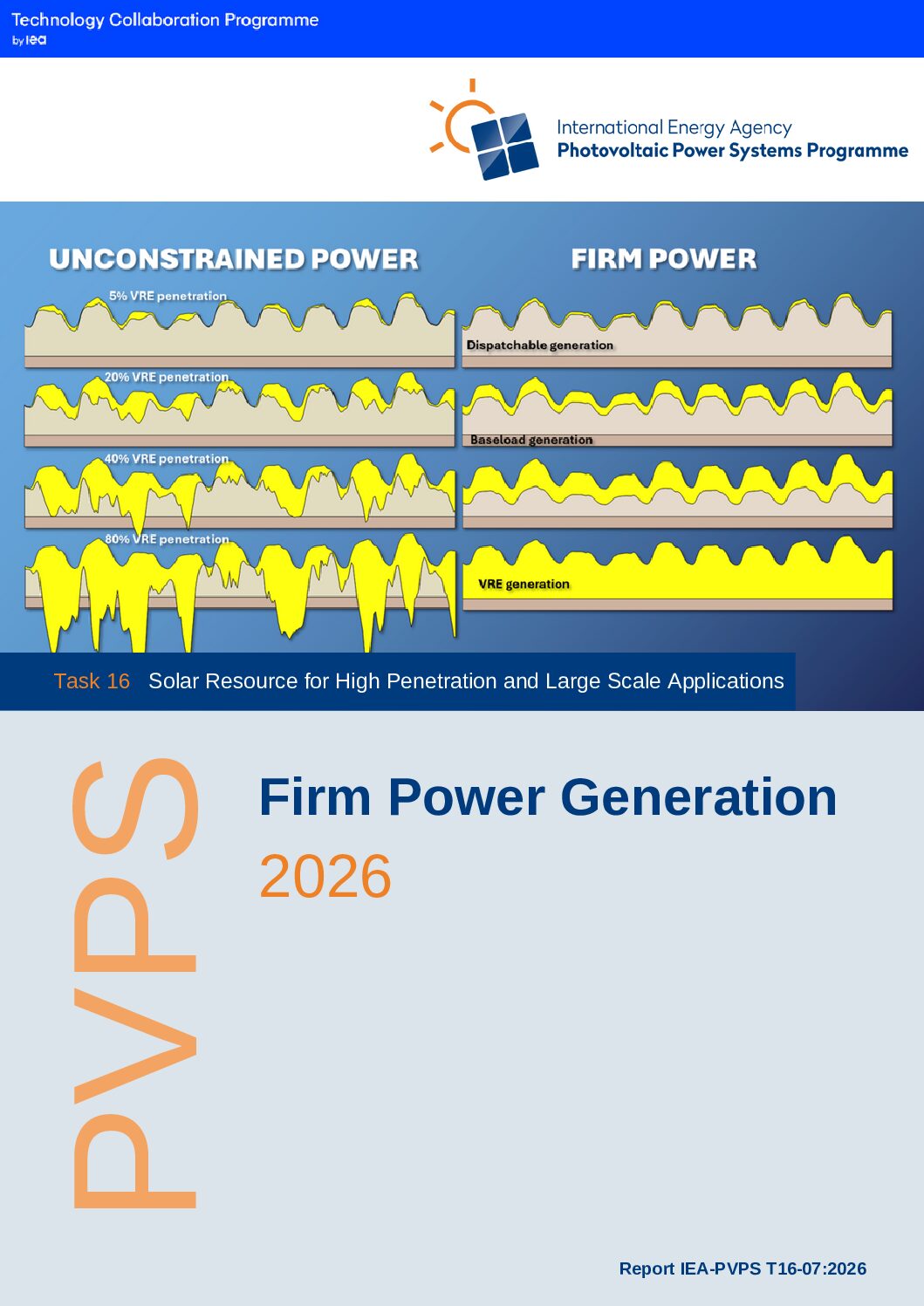
The report demonstrates that firm power can be achieved from wind and solar through cost-optimised system design. Key strategies include optimal blending of wind and solar resources, the use of short-term storage, overbuilding of VRE capacity combined with controlled curtailment (also referred to as implicit storage), and the introduction of system flexibility through demand-side measures or limited dispatchable generation using renewable fuels.
Key findings
· Analyses of hourly supply–demand balancing across diverse regions show that fully renewable VRE systems can economically provide year-round electricity without compromising reliability.
· Overbuilding and curtailment of wind and solar generation are identified as essential cost drivers, significantly reducing the need for seasonal storage or extensive cross-continental grid expansion.
· Small shares of dispatchable thermal generation using renewable fuels can lower overall system costs by providing flexibility during rare periods of low renewable output.
· Current electricity markets reward energy output rather than reliability and availability, penalize curtailment, and fail to value integrated resource systems. New frameworks – such as capacity-based remuneration and dual-market designs – are needed to unlock least-cost firm power configurations.
The report includes case studies at national, regional and local levels, covering regions such as China, Australia, Italy, Switzerland, Canada and the European Union.